
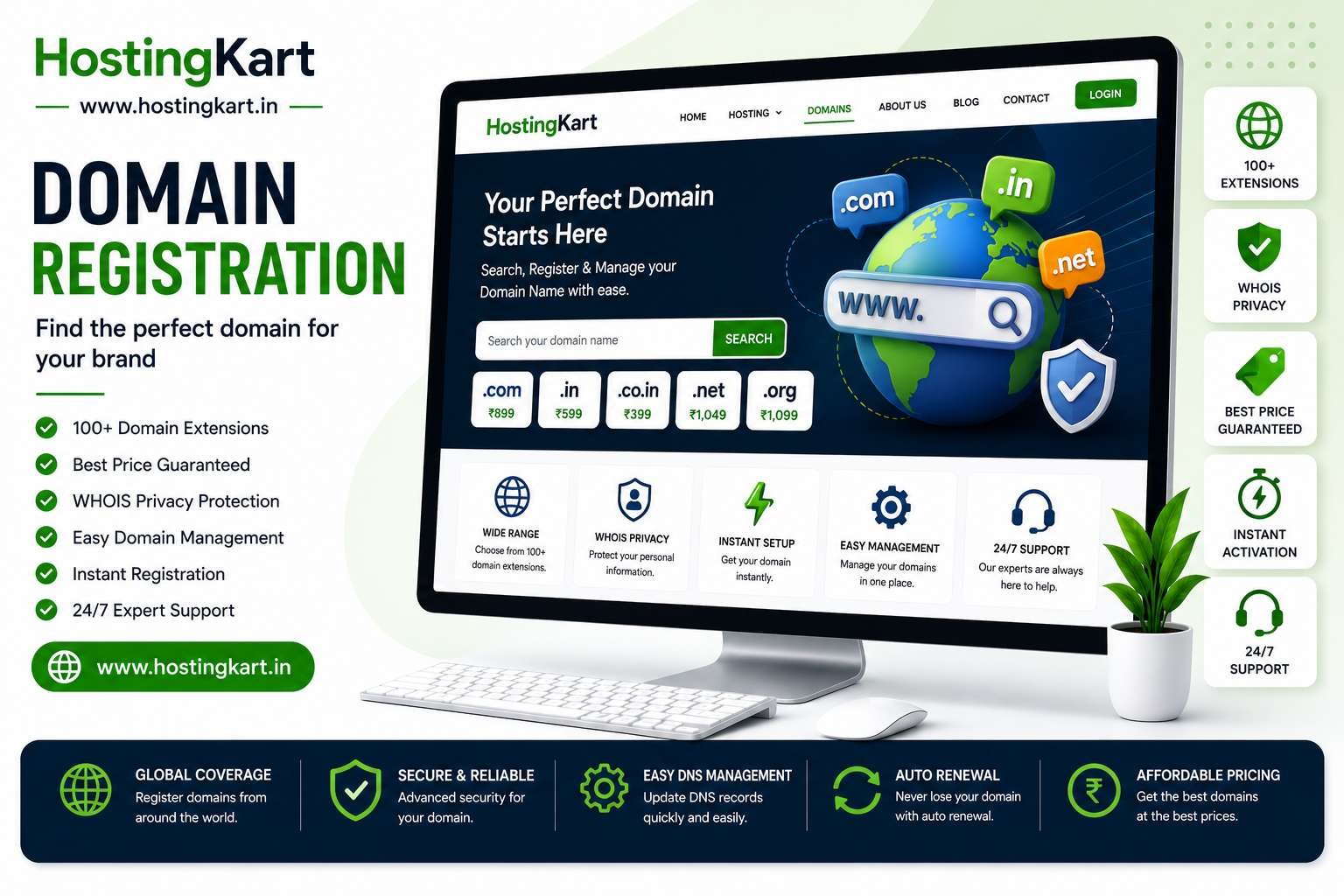

A domain name is one of the first things you'll need when creating a website. It represents your brand online and allows customers to find your business easily.
Whether you're starting a blog, launching a business website, or opening an online store, choosing the right domain name is an important step.
This guide explains how to register a domain name in India and the factors you should consider before making your purchase.
What Is a Domain Name?
A domain name is the web address people use to access your website.
Examples include:
- yourbusiness.com
- yourbrand.in
- yourcompany.co.in
Without a domain name, visitors would need to remember a numerical IP address to access your website.
Why Choosing the Right Domain Matters
Your domain name affects:
- Brand recognition
- Customer trust
- Memorability
- Marketing effectiveness
A good domain name can help establish a strong online presence from the beginning.
Step 1: Choose a Domain Name
When selecting a domain name:
Keep It Short
Short domains are easier to remember and type.
Make It Brandable
Choose a name that reflects your business or brand identity.
Avoid Numbers and Hyphens
These can create confusion when sharing your website address.
Keep It Easy to Spell
Visitors should be able to type your domain without difficulty.
Think Long-Term
Choose a name that will still be relevant as your business grows.
Step 2: Select the Right Domain Extension
A domain extension is the part that appears after the name.
Examples:
.com
The most recognized extension globally.
Best for:
- Businesses
- Brands
- Professional websites
.in
Popular for Indian businesses and local audiences.
Best for:
- Indian companies
- Local service providers
- Regional businesses
.co.in
A traditional business-focused Indian extension.
.net
Often used by technology-related businesses.
Step 3: Check Domain Availability
Once you've selected a domain name, check whether it is available for registration.
If your preferred domain is unavailable, consider:
- Alternative extensions
- Slightly modified brand names
- Shorter variations
Avoid choosing domains that closely resemble existing brands.
Step 4: Register the Domain
After confirming availability:
- Add the domain to your cart.
- Select the registration period.
- Create an account.
- Complete payment.
- Verify ownership information if required.
The domain is typically activated shortly after registration.
Step 5: Connect Your Domain to Hosting
After purchasing a domain, you'll need hosting to make your website accessible online.
The process generally involves:
- Updating nameservers
- Configuring DNS records
- Connecting the domain to your hosting account
Once connected, your website can be accessed using your domain name.
How Much Does a Domain Name Cost in India?
Typical annual pricing:
.com Domains
Approximate range:
₹800–₹1,500 per year
.in Domains
Approximate range:
₹500–₹1,200 per year
Premium Domains
Premium names may cost significantly more depending on demand and branding value.
Common Domain Registration Mistakes
Choosing a Very Long Domain
Shorter names are usually easier to remember.
Using Copyrighted Brand Names
Avoid names that could create legal issues.
Ignoring Renewal Dates
Domains must be renewed to maintain ownership.
Purchasing Without a Website Plan
Make sure your domain aligns with your long-term business goals.
Tips for Business Owners
Secure Multiple Extensions
If possible, register:
- .com
- .in
- .co.in
This can help protect your brand identity.
Use Professional Email Addresses
Examples:
Professional email addresses improve credibility.
Renew Early
Enable automatic renewal whenever possible.
Frequently Asked Questions
Can I Register a Domain Without Hosting?
Yes. Domains and hosting are separate services.
How Long Does Domain Registration Take?
Most domains become active within a short period after registration.
Can I Transfer My Domain Later?
Yes. Domains can typically be transferred between registrars.
Which Extension Is Best for Indian Businesses?
Both .com and .in are popular choices. The best option depends on your audience and branding goals.
Conclusion
Registering a domain name is one of the first and most important steps in building your online presence. A strong domain name helps customers find your business, improves brand recognition, and supports long-term growth.
Take time to choose a memorable and professional domain, secure the right extension, and connect it with reliable hosting to create a strong foundation for your website.