
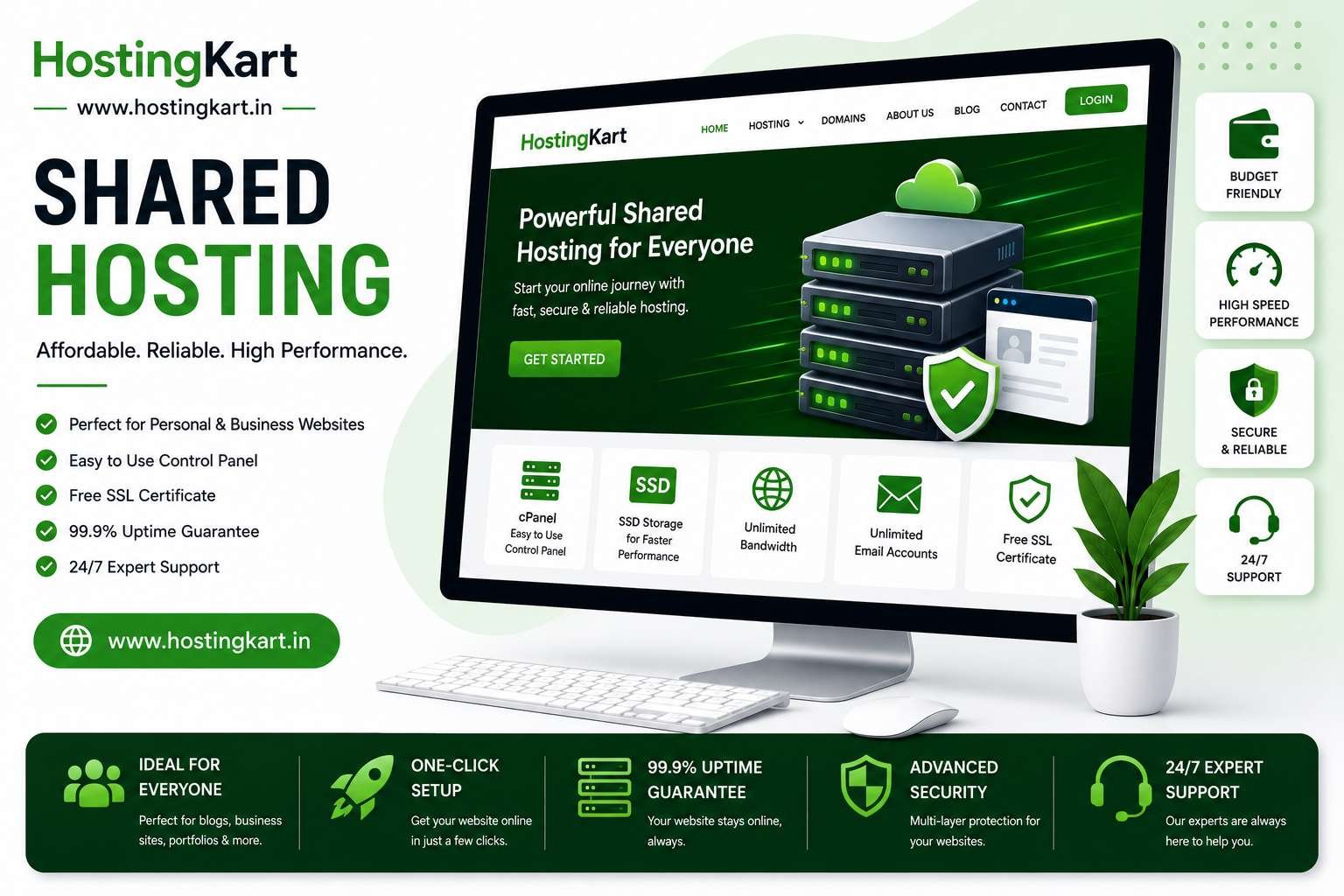

Choosing the right hosting plan is one of the most important decisions when launching a website. Two of the most popular hosting options are Shared Hosting and Cloud Hosting.
While both can host your website effectively, they differ significantly in terms of performance, scalability, reliability, and security.
In this guide, we'll compare shared hosting and cloud hosting to help you determine which solution best fits your needs.
What Is Shared Hosting?
Shared hosting is a hosting environment where multiple websites share the same physical server and its resources, including CPU, RAM, and storage.
Because resources are shared among many users, shared hosting is usually the most affordable hosting option available.
Advantages of Shared Hosting
- Low cost
- Beginner-friendly
- Easy setup and management
- Suitable for small websites
Disadvantages of Shared Hosting
- Limited resources
- Slower performance during traffic spikes
- Less control over server settings
- Performance may be affected by other websites on the server
What Is Cloud Hosting?
Cloud hosting uses multiple interconnected servers to host websites. Instead of relying on a single server, your website can access resources from a network of servers.
This architecture improves performance, reliability, and scalability.
Advantages of Cloud Hosting
- Faster loading speeds
- Higher uptime
- Better resource allocation
- Easy scalability
- Improved security
Disadvantages of Cloud Hosting
- Slightly higher cost than shared hosting
- May be more advanced for complete beginners
Shared Hosting vs Cloud Hosting: Key Differences
Performance
Shared hosting can perform well for low-traffic websites. However, performance may decrease when server resources are heavily used by other websites.
Cloud hosting delivers better performance because resources are distributed across multiple servers.
Winner: Cloud Hosting
Scalability
Shared hosting offers limited scalability.
Cloud hosting allows you to increase resources as your website grows without major disruptions.
Winner: Cloud Hosting
Reliability
If a shared hosting server experiences issues, all hosted websites may be affected.
Cloud hosting minimizes downtime because traffic can be distributed across multiple servers.
Winner: Cloud Hosting
Security
Shared hosting environments may present greater security risks because multiple websites share the same infrastructure.
Cloud hosting generally provides stronger isolation and security features.
Winner: Cloud Hosting
Pricing
Shared hosting remains the most budget-friendly option for new website owners.
Cloud hosting costs more but delivers significantly better performance and reliability.
Winner: Shared Hosting
Which Hosting Type Is Best for Small Businesses?
For new businesses with limited traffic and budget constraints, shared hosting can be a good starting point.
However, businesses planning to grow should consider cloud hosting from the beginning. The additional performance, uptime, and scalability often justify the small increase in cost.
When Should You Choose Shared Hosting?
Shared hosting is ideal if:
- You're launching your first website
- You have a limited budget
- Traffic levels are expected to be low
- You need a simple hosting solution
When Should You Choose Cloud Hosting?
Cloud hosting is ideal if:
- You run a business website
- You operate an online store
- You expect traffic growth
- Website speed is a priority
- You need higher uptime and reliability
Frequently Asked Questions
Is Cloud Hosting Faster Than Shared Hosting?
Yes. Cloud hosting typically provides faster performance because resources are distributed across multiple servers.
Is Cloud Hosting More Secure?
In most cases, yes. Cloud hosting generally offers enhanced security and better resource isolation.
Can I Upgrade from Shared Hosting to Cloud Hosting Later?
Yes. Most hosting providers allow seamless upgrades as your website grows.
Conclusion
Both shared hosting and cloud hosting have their advantages. Shared hosting is an affordable entry point for beginners, while cloud hosting provides better speed, reliability, security, and scalability.
If you're building a serious business website or planning for future growth, cloud hosting is often the smarter long-term investment. Choosing the right hosting solution today can help ensure a better experience for your visitors and support your website's success in the years ahead.